
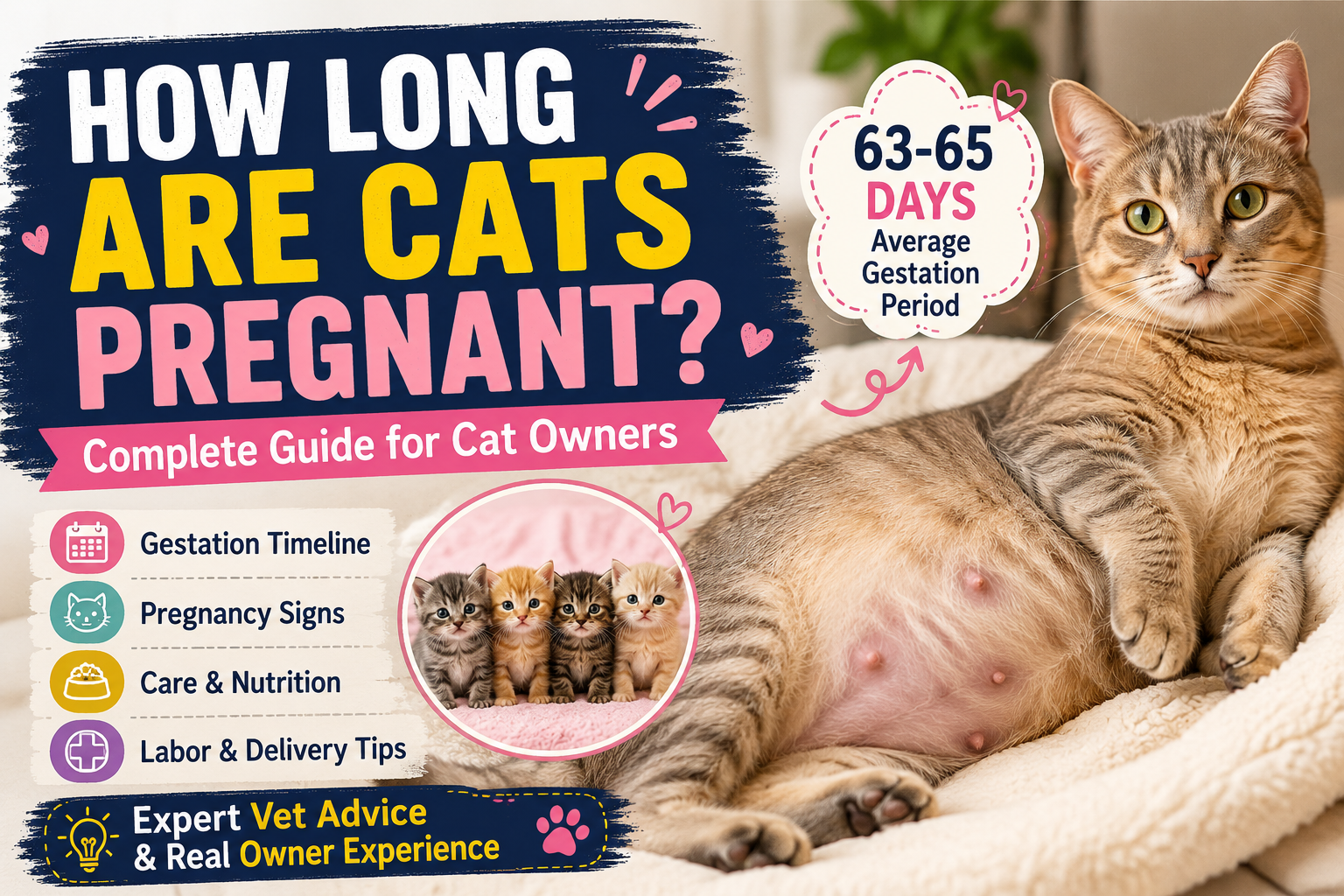
Wondering how long are cats pregnant? Most cats have a gestation period of 63 to 65 days, but several factors can influence the exact timeline. Understanding pregnancy stages, early signs, proper nutrition, and labor preparation helps ensure a healthy mother and kittens. This guide covers everything cat owners need to know for a safe feline pregnancy.
How Long Are Cats Pregnant? Understanding the Average Cat Gestation Period
A healthy cat pregnancy usually lasts 63 to 65 days, although some queens deliver between 58 and 72 days. The exact cat gestation period depends on breed, litter size, and overall health. During my years of caring for cats, I noticed that every pregnancy followed a slightly different timeline while remaining completely normal.
Many cat owners ask, “How long are cats pregnant?” The answer involves more than counting days. Feline pregnancy progresses through predictable developmental stages that prepare both the mother cat and kittens for birth. Monitoring eating habits, weight gain, and behavior helps identify healthy pregnancy progress and possible concerns requiring veterinary attention.
- 🐾 Most cats stay pregnant for around 63–65 days.
- 📅 Record the mating date if possible.
- 🍽️ Feed a balanced, high-quality diet.
- 💧 Keep fresh water available every day.
- 🛏️ Prepare a quiet nesting area early.
- ❤️ Watch for gradual weight gain.
- 👀 Observe changes in nipple color.
- 📸 Take weekly photos to monitor growth.
- 🐈 Avoid unnecessary stress.
- ✅ Contact your veterinarian if pregnancy exceeds 70 days.
👨⚕️ Veterinary Advice: As a cat veterinarian, I recommend scheduling a prenatal examination around three to four weeks after mating. Early health checks help confirm pregnancy, estimate litter size, and identify any complications before delivery.
🐈 Owner Experience: When my own queen became pregnant, I worried because she slept much more than usual. My veterinarian reassured me that increased rest was normal, and she delivered five healthy kittens exactly 64 days after breeding.
Signs of Pregnancy in Cats Week by Week
The earliest signs of pregnancy include pink, enlarged nipples, increased appetite, and affectionate behavior. As pregnancy progresses, the abdomen expands, kittens develop rapidly, and nesting instincts become stronger. Recognizing these feline pregnancy symptoms helps owners provide proper care throughout each stage.
Week-by-week observation makes cat pregnancy easier to understand. During the final two weeks, fetal movement becomes noticeable, and the mother cat seeks quiet places for nesting. Learning these pregnancy milestones helps reduce anxiety and prepares owners for labor and kitten arrival.
- 🌸 Pink nipples appear after about three weeks.
- 🍗 Appetite increases during pregnancy.
- 😴 Sleeping more is completely normal.
- 🏡 Nesting begins near delivery.
- 🐾 Gentle kitten movements may be felt later.
- 📦 Prepare a birthing box early.
- 🚫 Avoid changing food suddenly.
- 🧹 Keep the nesting area clean.
- ❤️ Give gentle affection when welcomed.
- 📞 Call your vet if you notice bleeding or severe lethargy.
👨⚕️ Veterinary Advice: As a veterinarian, I advise owners not to squeeze the abdomen to feel kittens. Gentle observation is much safer than physical examination, which should be performed by trained professionals.
🐈 Owner Experience: During my cat’s first pregnancy, I thought she was simply gaining weight. A few weeks later, I noticed kitten movement while she relaxed beside me, making the pregnancy feel incredibly real and exciting.
Caring for a Pregnant Cat Until Delivery
Proper care throughout pregnancy greatly improves the health of both the queen and her kittens. Nutritious food, stress-free surroundings, routine veterinary care, and careful observation support healthy fetal development. Preparing before labor reduces complications and helps ensure a smooth birthing experience.
As the due date approaches, your pregnant cat may eat less, become restless, or spend time inside her nesting box. These behaviors are normal signs of impending labor. Staying calm, monitoring contractions, and knowing when to seek emergency veterinary assistance are essential responsibilities for every cat owner.
- 🥩 Feed high-quality kitten food during late pregnancy.
- 💦 Keep water bowls full.
- 🛏️ Provide a warm nesting box.
- 🚪 Minimize loud noises and stress.
- 🧼 Keep the environment hygienic.
- 🐈 Limit contact with unfamiliar animals.
- ⏰ Monitor the expected due date.
- 📖 Learn the signs of labor.
- 🚑 Know your nearest emergency veterinary clinic.
- ❤️ Stay nearby during delivery without disturbing her.
👨⚕️ Veterinary Advice: As a cat veterinarian, I recommend seeking immediate veterinary care if your cat strains for over 30 minutes without delivering a kitten, has heavy bleeding, or appears extremely weak.
🐈 Owner Experience: Before my cat delivered her first litter, I prepared a quiet nesting box with clean blankets. She ignored it for two days, then chose it on delivery night and gave birth peacefully to four healthy kittens, making preparation completely worthwhile.
How Long Are Cats Pregnant? Understanding the Cat Gestation Period
A cat’s pregnancy, also called the feline gestation period, usually lasts 63 to 65 days, although healthy pregnancies can range from 58 to 72 days. Factors such as breed, litter size, genetics, nutrition, and overall health may slightly affect the due date. Understanding this timeline helps owners prepare for kitten birth with confidence.
Knowing how long cats are pregnant allows you to monitor your queen’s development week by week. During pregnancy, kittens grow rapidly, and the mother experiences physical and behavioral changes. Tracking appetite, weight gain, nesting behavior, and body condition helps ensure a healthy pregnancy while reducing stress before labor begins.
- 📅 Most cats stay pregnant for 63–65 days.
- 🩺 Confirm pregnancy with your veterinarian.
- 🍗 Feed premium-quality cat food.
- 💧 Always provide fresh drinking water.
- 🏡 Prepare a quiet nesting area early.
- ❤️ Expect gradual weight gain.
- 🌸 Pink nipples appear after about three weeks.
- 😴 Increased sleeping is completely normal.
- 📖 Keep a pregnancy calendar.
- 🐾 Stay calm and monitor daily changes.
👨⚕️ Veterinary Advice
As a cat veterinarian, I recommend scheduling a prenatal health examination around three to four weeks after mating. Early veterinary care helps detect complications, confirms pregnancy, estimates litter size, and ensures both the mother cat and kittens remain healthy throughout gestation.
🐈 My Experience as a Cat Owner
When my Persian cat became pregnant for the first time, I counted every day because I was excited and nervous. She delivered four healthy kittens on day 64, proving that patience, good nutrition, and regular veterinary checkups truly make a difference.
Week-by-Week Cat Pregnancy Signs and Kitten Development
Pregnant cats experience noticeable changes throughout each stage of pregnancy. During the first few weeks, appetite increases and nipples become pink. By the middle of pregnancy, the abdomen enlarges as kittens grow rapidly. Near delivery, nesting behavior, restlessness, and reduced activity become more obvious.
Understanding cat pregnancy symptoms, kitten development, feline reproduction, and pregnancy milestones helps owners recognize normal changes. Monitoring body weight, eating habits, hydration, and energy levels allows early detection of problems while ensuring the queen receives proper nutrition and emotional comfort before giving birth.
- 🌸 Watch for enlarged pink nipples.
- 🍽️ Appetite usually increases gradually.
- 😴 Extra sleep is completely normal.
- 🏠 Provide a comfortable resting place.
- 🐾 Feel kitten movement only in late pregnancy.
- 📦 Prepare a clean birthing box.
- 🚫 Avoid unnecessary handling.
- 🧹 Keep the environment hygienic.
- ❤️ Reduce household stress.
- 📞 Contact your vet if bleeding occurs.
👨⚕️ Veterinary Advice
As a veterinarian, I advise owners never to press or squeeze a pregnant cat’s abdomen. Improper handling can stress the mother or harm developing kittens. Let your veterinarian perform any necessary physical examinations or ultrasound evaluations safely.
🐈 My Experience as a Cat Owner
During my cat’s second pregnancy, I noticed she became unusually affectionate and followed me around the house. A week before labor, she spent hours inside the nesting box. These behavioral changes accurately signaled that delivery was approaching.
Caring for a Pregnant Cat Before Labor and Delivery
Proper care throughout pregnancy improves the health of both the mother cat and her kittens. Feed a high-protein diet, provide fresh water, maintain a peaceful environment, and schedule regular veterinary visits. Good prenatal care supports healthy fetal development and reduces the risk of pregnancy-related complications.
As the due date approaches, your queen may lose interest in food, groom herself frequently, and spend more time inside her nesting area. Recognizing these signs of labor helps you prepare for kitten delivery while knowing when emergency veterinary assistance may become necessary.
- 🥩 Feed nutrient-rich kitten food.
- 💦 Ensure constant access to water.
- 🛏️ Prepare a warm nesting box.
- 🚪 Keep loud noises away.
- 🧼 Maintain a clean environment.
- 🐈 Avoid introducing new pets.
- ⏰ Monitor the expected due date.
- 📖 Learn normal labor signs.
- 🚑 Save your emergency vet’s number.
- ❤️ Observe without disturbing her.
👨⚕️ Veterinary Advice
As a cat veterinarian, seek immediate medical attention if your cat experiences heavy bleeding, prolonged labor lasting more than 30 minutes without producing a kitten, severe weakness, or green discharge before the first kitten is born.
🐈 My Experience as a Cat Owner
The night before my cat gave birth, she refused dinner and quietly settled into the nesting box I had prepared weeks earlier. Staying nearby without interfering helped her remain relaxed, and she safely delivered five healthy kittens overnight.
Cat Pregnancy Timeline: How Long Are Cats Pregnant From Mating to Birth?
A healthy cat pregnancy, also known as the feline gestation period, usually lasts 63 to 65 days, although some queens deliver healthy kittens between 58 and 72 days. Factors like breed, age, genetics, nutrition, litter size, and overall health can influence the exact due date. Understanding the pregnancy timeline helps cat owners prepare for labor and provide the best prenatal care.
Monitoring your cat throughout pregnancy is essential for healthy kitten development. Common signs include increased appetite, pink nipples, weight gain, enlarged abdomen, nesting behavior, and reduced activity before labor. Learning about cat pregnancy stages, feline reproduction, kitten development, pregnant cat care, and labor signs helps owners recognize normal changes and identify potential complications early.
- 📅 Most cats are pregnant for 63–65 days.
- 🌸 Pink nipples appear after about three weeks.
- 🍗 Feed a high-quality, protein-rich diet.
- 💧 Keep fresh water available at all times.
- 🏡 Prepare a comfortable nesting box.
- ❤️ Monitor healthy weight gain every week.
- 🩺 Schedule regular veterinary checkups.
- 😴 Extra sleeping is completely normal.
- 📖 Record important pregnancy milestones.
- 🐾 Stay calm and reduce household stress.
👨⚕️ Veterinary Advice
As a cat veterinarian, I recommend confirming pregnancy with a veterinary examination around three to four weeks after mating. Early prenatal care helps assess fetal development, estimate litter size, monitor the mother’s health, and reduce the risk of complications during pregnancy and delivery.
🐈 My Experience as a Cat Owner
When my cat became pregnant for the first time, I checked her every day because I was worried something might go wrong. My veterinarian reassured me that gradual weight gain and increased sleeping were normal. She delivered four healthy kittens on day 64, making the experience unforgettable.
Caring for a Pregnant Cat Before Labor and Delivery
Providing proper care throughout pregnancy ensures the best outcome for both the mother cat and her kittens. Feed a balanced, nutrient-rich diet, maintain a peaceful environment, encourage hydration, and avoid unnecessary stress. These healthy habits support fetal growth, strengthen the queen, and prepare her body for a safe and successful delivery.
As labor approaches, your pregnant cat may become restless, stop eating, groom herself frequently, and spend more time in her nesting area. Recognizing these signs of labor, understanding cat birthing stages, and preparing emergency veterinary support help owners confidently manage the final days of feline pregnancy.
- 🥩 Feed kitten food during late pregnancy.
- 💦 Always provide clean drinking water.
- 🛏️ Prepare a warm, quiet nesting area.
- 🚪 Keep loud noises away.
- 🧼 Maintain a clean environment.
- 🐈 Limit contact with unfamiliar pets.
- 📦 Keep clean towels ready.
- ⏰ Monitor the expected due date.
- 🚑 Save your emergency veterinarian’s phone number.
- ❤️ Observe quietly without disturbing her.
👨⚕️ Veterinary Advice
As a cat veterinarian, seek immediate medical care if your cat has strong contractions for more than 30 minutes without delivering a kitten, develops heavy bleeding, has a foul-smelling discharge, or appears weak and exhausted during labor.
🐈 My Experience as a Cat Owner
Before my cat delivered her second litter, I prepared a nesting box several weeks in advance. Although she ignored it initially, she chose it on the day of delivery. Watching her safely give birth to five healthy kittens reminded me that preparation truly makes a positive difference.
Conclusion
Knowing how long cats are pregnant helps you prepare for every stage of your cat’s journey to motherhood. With proper nutrition, regular veterinary care, and a calm environment, most queens experience healthy pregnancies and safe deliveries. Monitor pregnancy signs closely, follow professional advice, and enjoy welcoming a happy, healthy litter of adorable kittens into your home.