
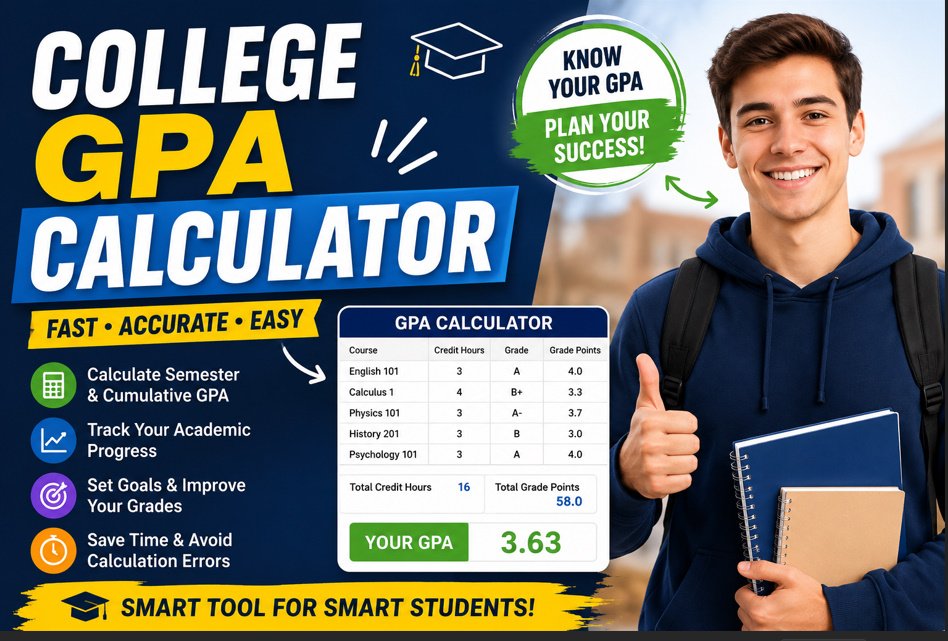
Improving your college GPA is one of the best investments you can make in your academic future. A higher Grade Point Average (GPA) can increase your chances of earning scholarships, qualifying for internships, gaining admission to graduate programs, and securing competitive job opportunities. The good news is that raising your GPA is possible with consistent effort and the right strategies.
Many students believe that one poor semester permanently affects their academic record. However, by developing better study habits, managing your time effectively, and using helpful academic tools like a College GPA Calculator, you can monitor your progress and steadily improve your grades over time. This guide shares practical, beginner-friendly tips that can help you achieve long-term academic success.
Understand Your Current GPA
Before you can improve your GPA, you need to know where you currently stand. Review your transcript and calculate both your semester GPA and cumulative GPA. Understanding your academic strengths and weaknesses helps you create a realistic improvement plan.
A College GPA Calculator makes this process simple by instantly calculating your GPA after you enter your grades and credit hours. It also allows you to predict future GPA outcomes based on different grade scenarios, helping you set achievable academic goals.
Key Actions
- Check your current GPA
- Review previous semesters
- Calculate cumulative GPA
- Identify weak subjects
- Set improvement goals
- Track academic progress
- Use a GPA calculator
- Monitor every semester
Create an Effective Study Schedule
Consistent study habits are one of the biggest factors in improving academic performance. Instead of cramming before exams, divide your study sessions into manageable daily blocks that focus on understanding concepts rather than memorizing information.
A structured schedule reduces stress, improves retention, and gives you enough time to complete assignments before deadlines. Studying regularly also makes exam preparation much easier throughout the semester.
Study Tips
- Study every day
- Follow a timetable
- Avoid last-minute cramming
- Take short breaks
- Review lecture notes
- Practice regularly
- Stay organized
- Remove distractions
Attend Every Class and Participate
At VIT, maintaining regular attendance is essential for strong academic performance and accurate GPA improvement. Attending lectures, tutorials, and laboratory sessions helps you better understand course concepts, stay updated on assignments, quizzes, practical assessments, and examinations, and meet the university’s attendance requirements. Consistent participation reduces knowledge gaps, improves your chances of earning higher grades, and ultimately contributes to a better Semester GPA (SGPA) and Cumulative GPA (CGPA).
Class participation also helps reinforce learning. Asking questions, joining discussions, and interacting with professors demonstrate engagement while improving your confidence and comprehension.
Classroom Habits
- Attend every lecture
- Arrive on time
- Participate actively
- Take detailed notes
- Ask meaningful questions
- Join discussions
- Listen carefully
- Stay focused
Improve Your Time Management Skills
Poor time management is one of the most common reasons students struggle academically. Balancing classes, assignments, work, and personal responsibilities requires planning and discipline.
Use planners, calendars, or productivity apps to organize your academic tasks. Breaking large assignments into smaller steps makes them easier to complete while reducing procrastination.
Time Management Tips
- Plan your week
- Prioritize important tasks
- Meet assignment deadlines
- Avoid procrastination
- Use digital calendars
- Set reminders
- Balance study and rest
- Review your schedule daily
Focus on High-Credit Courses
Not all courses affect your GPA equally. Classes with higher credit hours contribute more to your cumulative GPA, so improving your performance in these subjects can have a greater impact.
Spend extra study time on challenging, high-credit courses while maintaining good performance in other classes. This balanced approach helps maximize your overall GPA improvement.
Smart Priorities
- Identify high-credit courses
- Study difficult subjects first
- Practice regularly
- Complete assignments early
- Meet with instructors
- Improve test preparation
- Track your grades
- Stay consistent
Use Campus Academic Resources
Most colleges provide valuable academic support services, including tutoring centers, writing labs, study workshops, and academic advising. Taking advantage of these resources can significantly improve your understanding of difficult subjects.
Don’t hesitate to seek help when needed. Successful students often ask for guidance early rather than waiting until their grades decline.
Helpful Resources
- Tutoring centers
- Writing labs
- Academic advisors
- Library resources
- Study workshops
- Online learning tools
- Professor office hours
- Peer mentors
Develop Better Exam Preparation Strategies
Effective exam preparation begins weeks before the actual test. Reviewing notes regularly, completing practice questions, and studying with classmates improve both confidence and retention.
Avoid all-night study sessions before exams. Getting enough sleep, eating healthy meals, and managing stress contribute to better concentration and higher test scores.
Exam Success Tips
- Start preparing early
- Practice previous questions
- Revise consistently
- Sleep well
- Eat nutritious meals
- Stay hydrated
- Reduce stress
- Review mistakes
Track Your Progress Throughout the Semester
Improving your GPA is an ongoing process rather than a one-time effort. Regularly monitor your grades, assignment scores, and test performance so you can identify problems before they become serious.
Using a College GPA Calculator after each assignment or exam helps estimate your current standing and shows how future grades will affect your semester and cumulative GPA.
Progress Tracking
- Review grades weekly
- Update GPA regularly
- Set monthly goals
- Celebrate improvements
- Adjust study plans
- Analyze weak areas
- Stay motivated
- Maintain consistency
Maintain Healthy Habits for Academic Success
Academic success depends on more than studying. Good physical and mental health improve concentration, memory, and productivity. Students who maintain healthy routines often perform better throughout college.
Exercise regularly, eat balanced meals, stay hydrated, and get enough sleep each night. Managing stress through relaxation techniques or hobbies also contributes to better academic performance and higher GPA over time.
Healthy Habits
- Sleep 7–9 hours
- Eat balanced meals
- Exercise regularly
- Stay hydrated
- Manage stress
- Take study breaks
- Maintain a positive mindset
- Build healthy routines
Conclusion
Learning how to improve College GPA requires commitment, smart planning, and consistent effort. By attending classes regularly, managing your time effectively, focusing on high-credit courses, using campus resources, and maintaining healthy study habits, you can steadily raise your academic performance. A College GPA Calculator is an excellent companion throughout this journey, allowing you to track your progress, predict future GPA outcomes, and stay motivated toward achieving your educational goals. Small improvements each semester can lead to significant long-term academic success and open doors to scholarships, graduate school, internships, and rewarding career opportunities.