
1. What Is a Fake Name Generator?
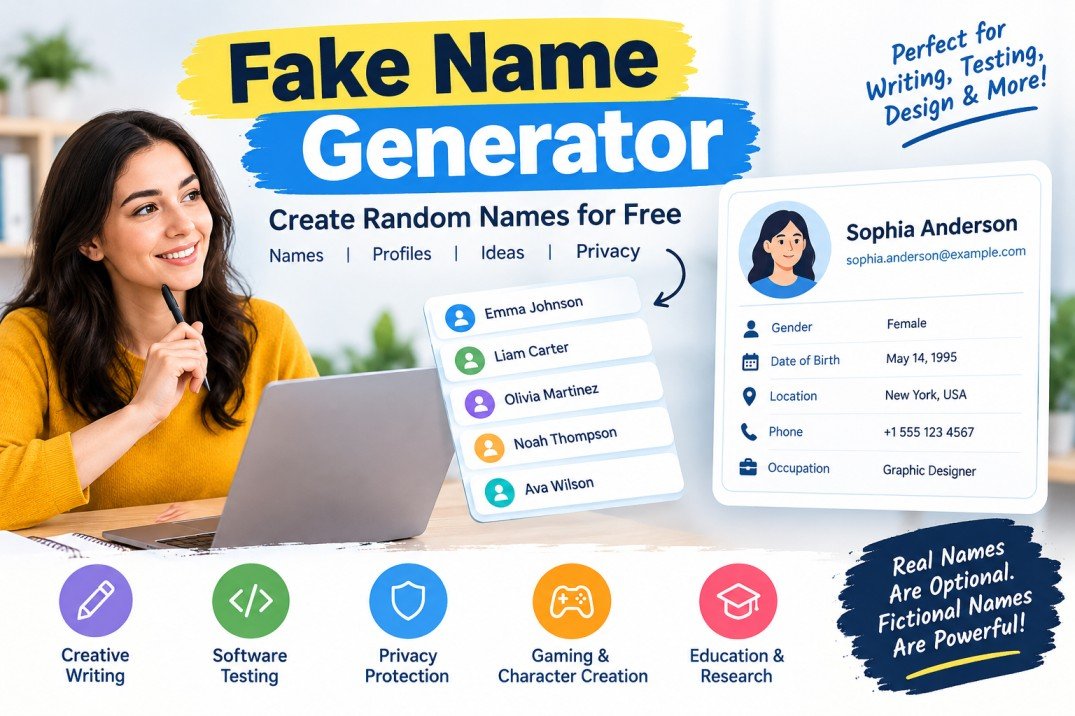
A fake name generator is an online tool that automatically creates fictional names for personal projects, creative writing, gaming, and software testing. It can generate first names, surnames, or complete names within seconds. Instead of brainstorming ideas manually, users can explore multiple name combinations and select options that fit their specific needs.
Many random name generators also offer customization features, including country, language, gender, and naming style. Depending on the website, users may generate fictional usernames, character profiles, or sample identity details. These tools are particularly useful for beginners who need realistic examples without using actual personal information in demonstrations or practice projects.
- Generate random full names.
- Explore international naming styles.
- Create fictional character names.
- Find ideas for usernames.
- Produce sample database records.
- Support creative writing projects.
- Create names for gaming characters.
- Generate placeholder information quickly.
2. How Does a Fake Name Generator Work?
A fake name generator typically uses name databases, predefined lists, or algorithms to combine first names and surnames. Some tools organize their databases by country, language, or naming tradition, helping users generate names that resemble those commonly found in particular regions. Results vary depending on the generator’s database and customization options.
Using a name generator is usually simple. Open the website, select any available preferences, and click the generate button. The tool displays one or more suggestions that you can review, copy, or regenerate. Some services also provide bulk generation, allowing users to create multiple fictional names for spreadsheets, prototypes, and testing environments.
- Open a name generation website.
- Select your preferred settings.
- Choose a country or region.
- Select a naming style.
- Click the generate button.
- Review the generated results.
- Copy your preferred name.
- Generate more names when needed.
3. Important Features of a Fake Name Generator
The best fake name generator combines convenience with useful customization options. Depending on the platform, users may choose regional naming conventions, generate multiple names simultaneously, or explore different combinations of first and last names. These features make it easier to find suitable names for fictional characters, sample profiles, and creative projects.
Some advanced tools offer additional functionality, such as username suggestions, fictional addresses, sample birth dates, and downloadable datasets. However, not every generator includes these options. Before selecting a tool, review its available features, privacy practices, and usage terms to ensure it meets your requirements without collecting unnecessary personal information.
- Random first and last names.
- Country-based name generation.
- Multiple naming combinations.
- Customizable generation preferences.
- Fictional username suggestions.
- Bulk name generation options.
- Copy-and-paste functionality.
- Optional sample profile information.
4. Benefits of Using a Fake Name Generator
One major advantage of a fake name generator is time savings. Creating suitable names manually can become difficult when a project requires dozens or hundreds of examples. An automated tool generates suggestions quickly, making it easier for writers, developers, teachers, and content creators to complete repetitive tasks and explore new creative possibilities.
Another benefit is the ability to use fictional information instead of unnecessarily exposing real personal details. Sample names can improve presentations, educational exercises, and website demonstrations. When combined with properly fictionalized supporting information, they can also help create safer testing datasets. Nevertheless, a generated name alone does not guarantee privacy or anonymity.
- Save time brainstorming names.
- Generate multiple options instantly.
- Improve creative writing workflows.
- Build fictional character identities.
- Support classroom activities.
- Create realistic demonstration records.
- Reduce unnecessary personal data exposure.
- Simplify software testing preparation.
5. Common Uses of a Fake Name Generator
A fake name generator has applications across entertainment, education, technology, and content creation. Authors can use it to name characters in novels, short stories, and screenplays. Game developers can create names for non-player characters, while educators can prepare fictional examples for quizzes, assignments, and classroom exercises without relying on students’ actual personal information.
Businesses and developers may also use generated names in website prototypes, registration form demonstrations, and database testing. Fictional sample records make interfaces easier to evaluate before real information is introduced. For professional testing, use clearly designated test data and avoid placing invented identities into systems where they could be mistaken for genuine customers or employees.
- Name characters in novels.
- Develop role-playing game identities.
- Test website registration forms.
- Populate sample spreadsheets.
- Prepare educational worksheets.
- Demonstrate customer management systems.
- Create fictional business examples.
- Design application prototypes.
6. Fake Name Generator for Privacy and Online Safety
A fake name generator can help users avoid displaying their real names in low-risk creative projects and public demonstrations. For example, a designer might use fictional names in a portfolio screenshot, while a developer might use placeholder identities when testing a registration form. This approach can reduce unnecessary exposure of personal information in sample materials.
However, using a fictional name does not make every online activity anonymous. Websites may still collect IP addresses, cookies, device information, or other technical data. Some services also require accurate identity information for legal, financial, or security reasons. Always follow applicable laws and platform policies, and never use generated identities to commit fraud or impersonate real people.
- Avoid sharing sensitive personal information.
- Review the website’s privacy policy.
- Use fictional data in demonstrations.
- Keep test accounts separate.
- Avoid impersonating real individuals.
- Never share passwords with generators.
- Follow legitimate identity verification rules.
- Use secure development environments.
7. How to Choose the Best Fake Name Generator
Choosing the right fake name generator depends on your goals. Writers may prefer tools that offer diverse international names, while software developers may need bulk generation and export options. Casual users might prioritize speed, simplicity, and a straightforward interface. Identifying your primary use case makes it easier to select a suitable tool.
Before using a generator, examine its customization options, privacy policy, and limitations. Check whether it requires registration, displays excessive advertisements, or requests unnecessary information. If you plan to use generated names commercially, review the website’s terms. For sensitive software testing, consider established synthetic-data tools that offer better control over data formats and test records.
- Choose an easy-to-use interface.
- Compare customization features.
- Check regional name availability.
- Review privacy and security practices.
- Look for bulk generation.
- Check export formats when needed.
- Avoid suspicious downloads.
- Confirm suitability for your project.
8. Frequently Asked Questions About Fake Name Generators
Fake name generators are generally easy to use, and many websites provide free basic functionality. Depending on the service, users may also find premium features for advanced customization or bulk generation. Before relying on a particular tool, check its current pricing, available features, and terms of use to understand any limitations.
Another important consideration is accuracy. Generated names may resemble real people’s names because they use familiar naming patterns and common combinations. Therefore, fictional names should not automatically be considered unique or suitable for every application. When creating sample datasets, combine fictional names with appropriate test information and verify that the results meet your project’s requirements.
- What is a fake name generator? It is a tool that creates fictional names automatically.
- Is a fake name generator free? Many websites offer free basic features.
- Can I use generated names in stories? Yes, they can help develop fictional characters.
- Are generated names unique? No, they may match existing people’s names.
- Can developers use these tools? Yes, they can generate names for suitable testing scenarios.
- Can I generate names from different countries? Some tools support multiple countries and naming traditions.
- Does a fake name protect my privacy? It may reduce unnecessary exposure, but it cannot guarantee anonymity.
- Can I use fake identities everywhere? No, you must follow applicable laws and service requirements.
Conclusion
A fake name generator is a convenient online tool for creating fictional names for writing, gaming, education, and software development. By automating the naming process, it saves time and provides a wide range of ideas for projects that require realistic-looking examples. To get the most value from a random name generator, choose a tool that matches your needs, review its privacy practices, and use the results responsibly. Whether you are developing fictional characters or testing a new application, generated names can make your workflow more efficient while helping you avoid unnecessary use of real personal information.